
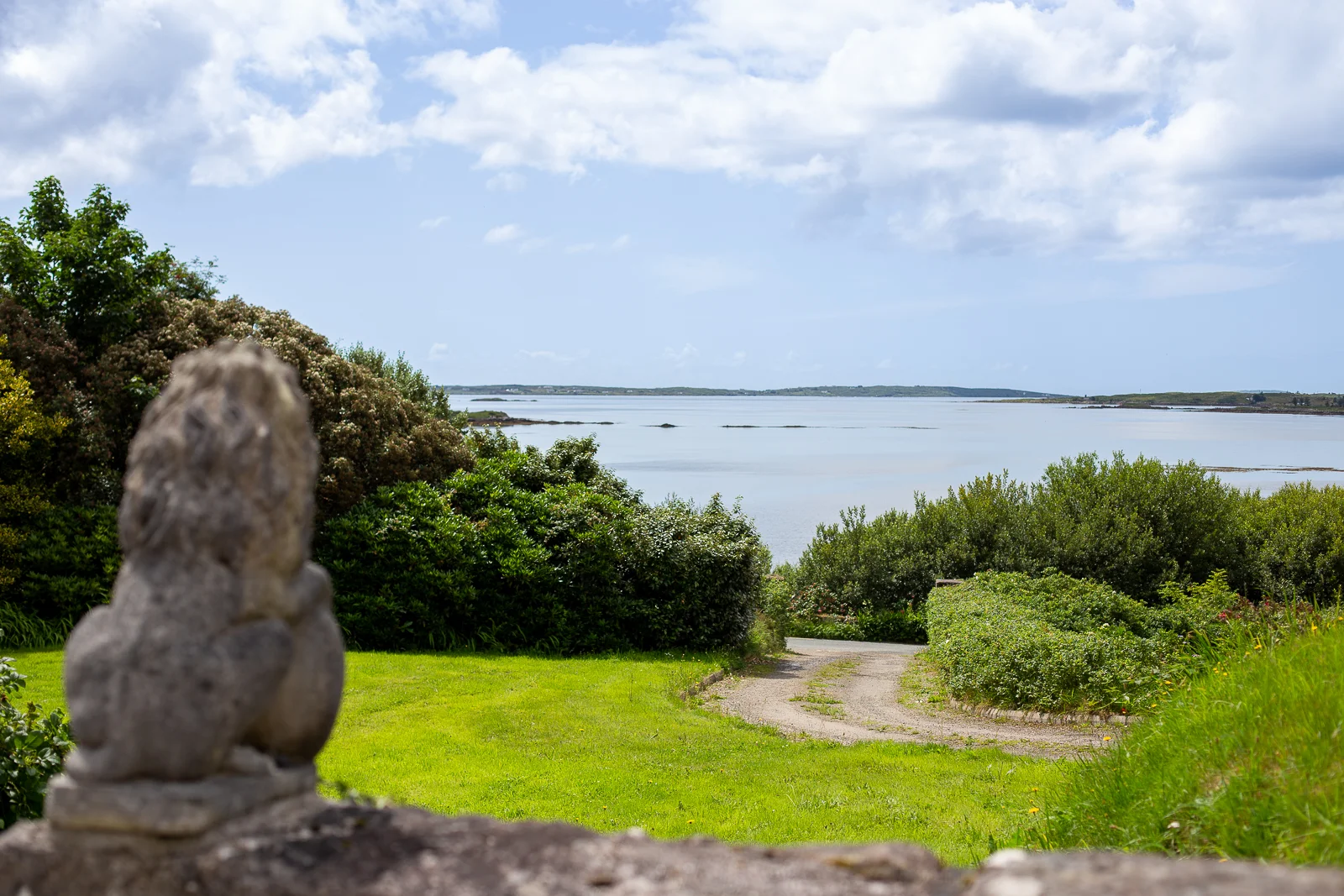
Doonreagan, the name meaning Reagan’s fort, started out, possibly in neolithic times, at the top of the land surrounding Doon House, where there are still ruins of dwellings that pre-date any written records. The stretch of Connemara running from the shore of Cashel Bay up to the 300-metre summit of Cashel Hill has changed little in two thousand years.
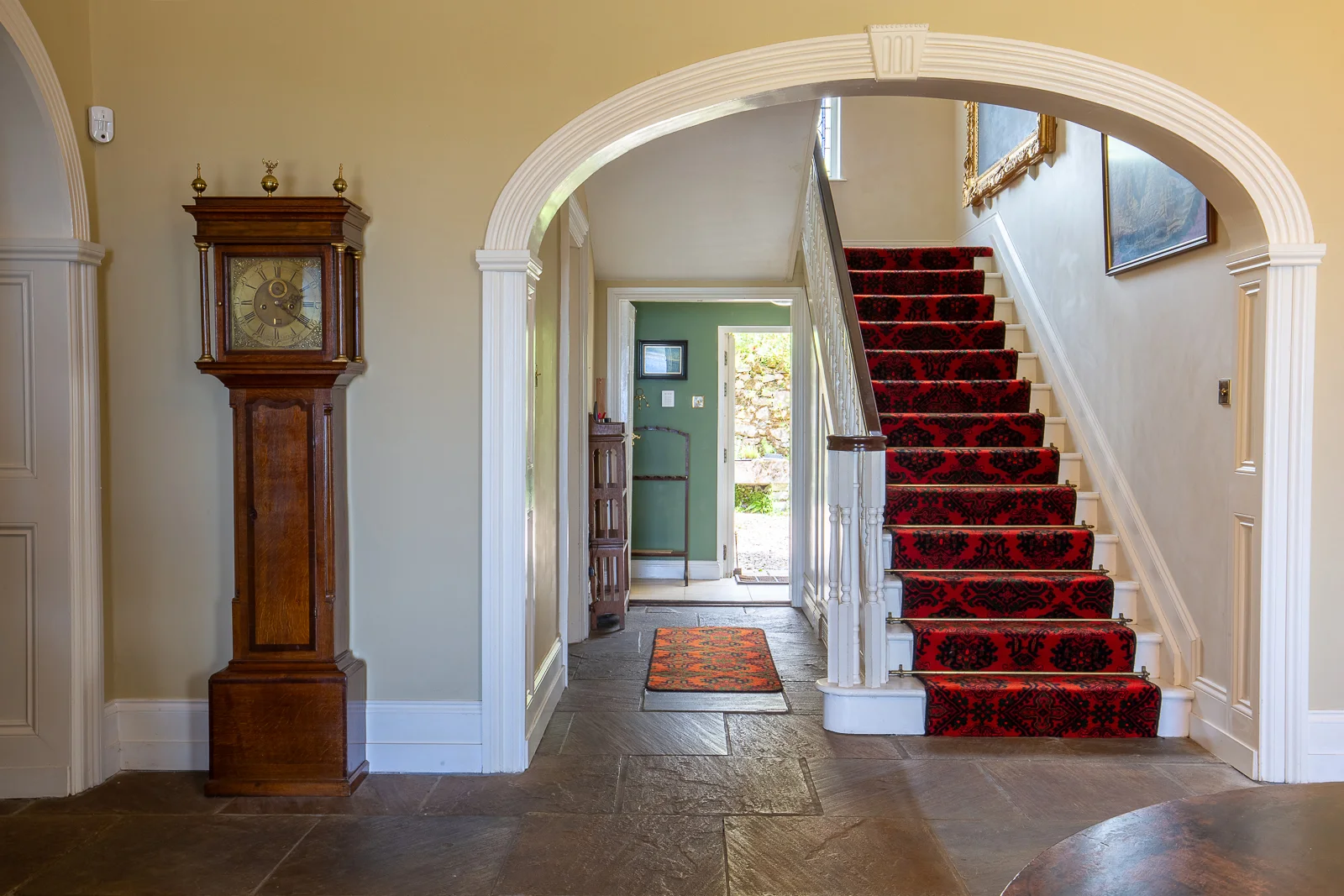
The staircase, unchanged since the house’s Georgian remodelling.
A house built for seaweed
The main house at Doonreagan was built in the late eighteenth century by Thomas Hazell, a Scotsman who had come to this coast to oversee the kelp trade — the harvesting and burning of seaweed for potash, which had various uses, not least for the production of saltpeter for gunpowder. By 1800, the kelp trade on this stretch of coast was worth an estimated £10,000 a year — a massive sum in today’s money. Hazell’s business left its mark well beyond Doonreagan itself: during the famine, the local population was helped by projects to build walls and piers. A number of jetties along the shore built for the kelp industry are still standing. Neighbouring Cashel House, built by Hazell for his son in 1840, is today a classic country house hotel of international renown.
War, wireless, and a diverse cast of visitors
The twentieth century brought the wider world to this remote corner of Galway. Some twenty minutes from Cashel, at Derrygimlagh near Clifden, Guglielmo Marconi built the wireless station that sent the first commercial transatlantic radio signal in 1907. Prior to this, he had sent his agent to Doonreagan to investigate possibilities of having his base in Cashel. The Marconi Station site outside Clifden welcomes visitors today and is well worth a visit.
Doon House did not escape the upheavals of the following decades. During the War of Independence in the 1920s, Doonreagan came under attack from the Black and Tans; its owner at the time is said to have saved himself by escaping on foot over Cashel Hill. The front door, peppered by bullets, was still in place in the 1960s.
In the calmer decades that followed, Cashel became an unlikely gathering point for artists and public figures drawn to the peace and beauty of its surroundings — among them, at various times, were Lucian Freud, Paul Newman, Claire Bloom, Rod Steiger, Bono and The Edge. It was to this quiet corner of Connemara that the future Poet Laureate Ted Hughes escaped in 1966, renting what was then called Doonreagan House, for a chance to write some of his most acclaimed poetry.
A family home since the 1960s
After changing hands several times in the twentieth century, Doon House was bought in the late 1960s by Robert Jocelyn, the future 10th Earl of Roden, who made it his family home, after the historic family seat, Tollymore Park in Co. Down, had proved too cumbersome for modern times. His family own and run Doonreagan today.
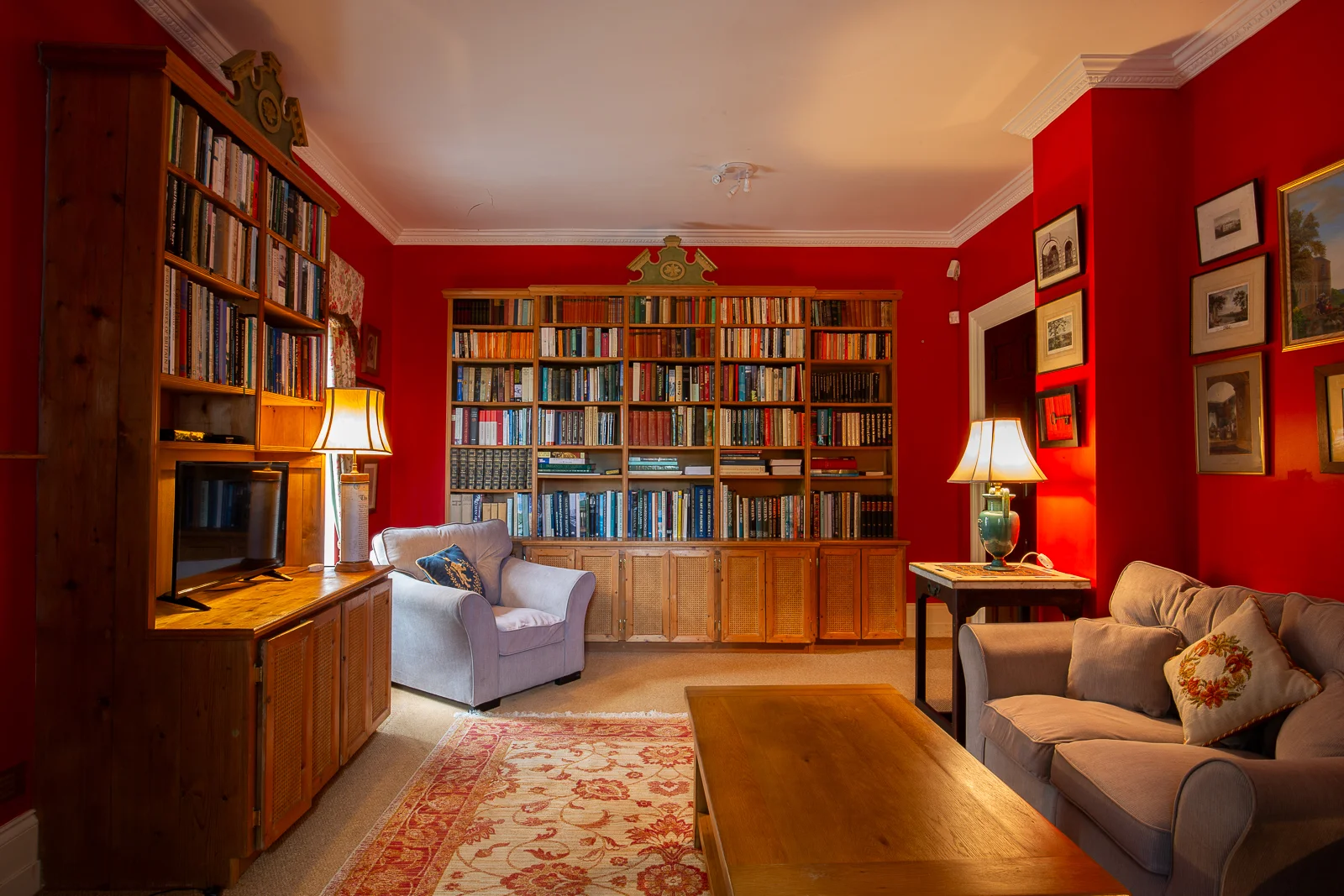
The library — some four thousand books, built up over decades.
The history of the house is still legible: in the Georgian proportions of the rooms; in centuries-old art and furniture made specially for the family; in the library of some four thousand books built up over decades; and in the private foreshore below the house that once carried kelp out to market and now welcomes visitors with a sauna and natural sea pool. Guests who book a stay at Doon House are, in a small way, taking their place in a history that runs back through poets and earls to a Scotsman’s seaweed trade and surroundings that have barely changed over the centuries.